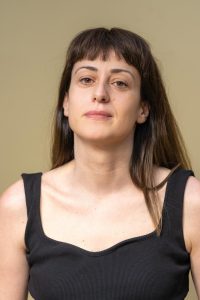
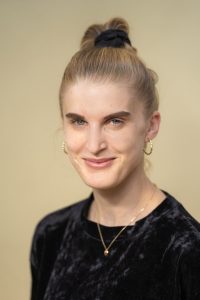
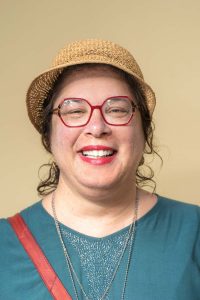
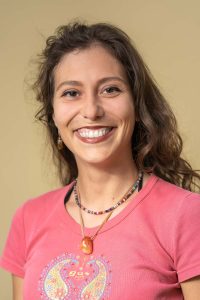
Oyidiya Oji Palino
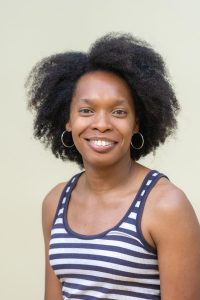
(She, Her)
I am a data scientist and activist with an anti-racist and decolonial perspective. I currently research and map projects and initiatives of resistance and reappropriation of technology, with a special focus on AI. I work as a collaborator for Espai Societat Oberta, a platform from the Open Society Foundation in Barcelona, coordinating events and writing content about my research. In the past I participated in a transformative leadership programme planned by Working on our Power, a European collective based in UK and Denmark, and I have worked actively in grassroots organisations from the African and Asian diaspora in Barcelona.
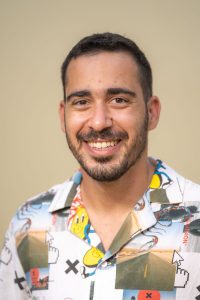
Vijay Patel
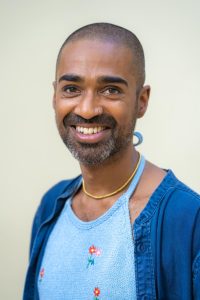
(He, Them)
My evolving interdisciplinary arts-based research practice explores migration, diaspora, displacement, memory and identity while centring the lived experiences of marginalised and intersectional political subjectivities. This focus grounds my professional and community-based work as I navigate various roles: mixed-media artist, workshop facilitator, cultural producer, programmer and curator. Founding member of InterStruct Collective and co-author of various projects, among others: Unearthing Memories (exhibition and curatorship, RAMPA, Porto, 2019) and Ruptures in Cement: Decolonial tour from Palacio de Cristal to Cordoaria (TransEuropa Festival, 2022). Fine Art graduate with Masters in Multimedia. Non-binary (grew up as cis-male), queer and British Indian living in Portugal.
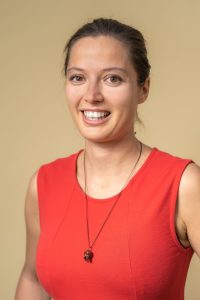
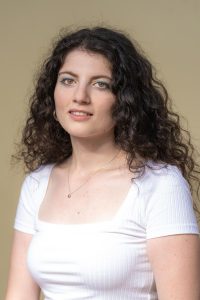
Eliza Goldox
(She, Her)
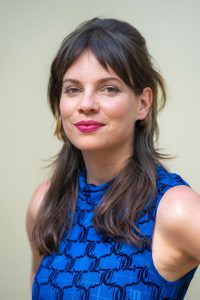
Eliza Goldox is an artist and project initiator with an interest in collective dynamics and the use of digital reenactments as a tool for speculative thinking and social/ political reflections. Her solo and collaborative projects involve a variety of mediums with a focus on moving image, installations and new media. After studying in Germany, the US and the UK she lived in Berlin for 7 years during which she was active in the independent art scene and worked and exhibited in several art institutions there and abroad. Her special interest in collectivity is translated through her art initiative ZONA D, co-founded in 2012. In this initiative she directs and conceptualises non-institutional collective environments as a ground for experimental productions and processes. In 2018 she started working in the artist duo HUNITI GOLDOX together with Areej Huniti. In their joint practice they are interested in geopolitical realities, marginalised oral histories and contextual research with a special focus on water and mythology.
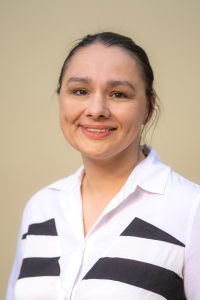
Katrine Pedersen
(She, Her)
Katrine Pedersen is a writer and external lecturer at the IT University in Copenhagen. She teaches in digital sustainability and critical discourse analysis. She is the co-founder of ART+TECH Lab inspired by Institut de recherche et d'innovation, the Centre Pompidou in Paris, the Library of Africa & the African Diaspora in Accra, LACMA Art + Technology Programme in Los Angeles and the New School in New York. The Lab cultivates collaborations across disciplines such as art, industry and science. Past collaborations with SFMOMA, Musée Picasso-Paris, Mixed Reality Laboratory – The University of Nottingham, Next Game, Rails Girls, Blast Theory, The Danish Film Institute et al.
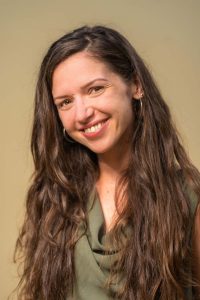
Louise Staugaard
(She, Her)
Louise Staugaard is currently looking into new critical sensuous approaches seeking to develop methods for dismantling oppressive structures within the field. For the last five years she has collaborated with Katrine Pedersen at the ART+TECH Lab at ARKEN Museum of Modern Art. The Lab was founded with the aim of social and ecological inclusion. Challenging the dominant (white) narrative of tech by exploring and rethinking new technologies for our society through aesthetic methods and theory.
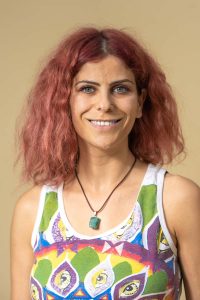
Eva Macali
(She, Her)
I was born in 1974 in Siena, Italy. I am an interdisciplinary artist working with painting, sculpture, sound, and video, often integrating them through installation and experimental writing. I develop personal projects as well as participatory and social projects. Over the years I have carried out institutional work of communication and research in national and international public bodies, as well as in advertising agencies and companies. My art projects have been exhibited in museums, foundations, and non-profit venues in Italy and abroad.
Lauren Lapidge
(She, Her)
I’m an artist, researcher and community organiser based in Athens where I’m active in social movements. I have studied Fine Art Practice at Goldsmiths, University of London and hold a postgraduate degree in Architecture at ESALA, University of Edinburgh. I’m currently researching and writing around the intersection of radical politics and networking technologies. Previously, I contributed to unMonastery, an open source initiative for living spaces inspired by monasticism and hackerspace design patterns and MAZI zone a DIY networking toolkit for location based collective awareness.
David Sarlos
(He, Him)
Vialog.io founder who has led successful research in mobile video innovations as Project Lead, including in decentralised social media. He has designed and led large-scale pilots for innovative technologies at events such as an A-list film festival with 80,000 attendees. He previously founded a successful theatrical distribution company, CinefilCo. Studied at the London Film School, member of the National Association of Hungarian Journalists, Apple Certificated Final Cut Pro editor, presented at 2011 TEDxYouth conference, Budapest with the topic ‘How will we access culture in 2020?’.
Jamie Allen
(He, Him)
Jamie Allen investigates ecological, infrastructural, metabolic, technological, and institutional intersections through media and material artworks, experimental performances, lectures and writing. He likes to make things with his head and hands, most often in collaborations that acknowledge friendship and love as part of knowledge practices like art and research. Allen regularly participates in international research events, fieldwork and exhibitions at places like Savvy Contemporary, Haus der Kulturen der Welt, NYU Abu Dhabi, documenta14 and Neue National Galerie. Featured commissions take place with partners like Nikolaj Kunsthal, Walk&Talk Festival and transmediale festival.
Pavel Ruzyak
(He, Him)
Pavel Ruzyak is living in Prague, the Czech Republic. He studied at film school FAMU in Prague and at Babelsberg Film University in Germany, department of film directing, graduated in 2016. He has directed fiction films and documentaries, short and middle length. His films were screened in competition at international film festivals. Moreover, he has been selected to international film workshops, labs and pitches. He is currently working on his feature film project with a topic of contemporary teenagers. Apart from the artistic career, he has been active in volunteering, social issues, youth politics and international relations. Pavel has also extended knowledge of languages and experience in multi-disciplinary collaborations.
Marta Espiridião
(She, They)
Marta Espiridião graduated in Sciences of Art and Heritage (Fine Arts, Lisbon), has a post-grad in Contemporary Art Studies and Curating from the Faculty of Letters of Lisbon, a Master in Sciences of Communication in FCSH Lisbon, and is currently starting a Ph.D. program in Transart Institute with the research project "Feminist Killjoys: New Embodiments in Moving Image”. Independent curator and researcher, created several independent curatorial projects, of which is highlighted "Bodies in Space - critical archive of non-normative experiences of the city" (Lisbon), a critical space to re-think the place of non-normative bodies within urban landscapes, how they relate to common surroundings, and in what ways the city exerts discriminatory violence over identities and bodies. In the last years curated many exhibitions and programs, like the collective exhibition and public program "Error 417: Expectation Failed" (2021-2), winning project of the curatorial competition “Expo’98 no Porto”, Oporto Municipal Gallery; or "Sonic Materialities" (2020), an engagement program and exhibition of Andreia Santana, funding awarded by the Criatório Competition; and the exhibition of João Gabriel, “de noite todos os gatos” (2019), and was also responsible for the creation of the project “cool ain’t cool anymore” (2018), a multidisciplinary programme that included two solo and one collective show, and an informal knowledge platform called 2cool4school. Writes about contemporary art for several outlets.
Yoni Lefevre
(She, Her)
Yoni Lefevre has extensive research experience as a Senior Design Researcher at STBY (2020 - 2022) working together with a variety of clients, stakeholders and participants for meaningful change. Before STBY, Yoni worked as a Research Associate for the Innovation School, at The Glasgow School of Art (2018 - 2020) in Scotland. She was involved in multiple research projects about the integration of Health and Social Care in Moray. Having worked as a freelance Social Designer (2014 - 2017), Yoni is able to adapt and emerge herself in different research contexts where she facilitates different co-creating projects with a variety of participants. Yoni has a Master of Research degree from The Glasgow School of Art (2018), and a Bachelor of Design from Design Academy Eindhoven (2013).
Katerina Gkoutziouli
(She, Her)
Katerina Gkoutziouli is a curator, researcher and project manager based in Athens, Greece. Her research focus is on art and digital culture exploring issues related to cultural identity, network politics, surveillance in and on the Internet, data-mining, big data and emerging AI technologies. She has worked as a curator, researcher, mentor, cultural consultant and project manager in public institutions and cultural organisations, such as the Athens School of Fine Arts, the Goethe-Institut Athens, the Athens Digital Arts Festival, the Municipality of Athens, the Athens Development & Destination Management Agency, the Benaki Museum, SIGGRAPH Festival, Bios-Romantso, etc. She is a Fulbright fellow. She is co-founder of VEKTOR Athens.
Katrzyna Dybzynska
(She, Her)
I am an internationally awarded writer published in Ireland, the UK, the US, Australia, Germany, and Poland (Channel, Mslexia, The London Reader). Polish Non-Fiction Institute graduate and BA-MA Researcher for Global Center for Advanced Studies. I have just completed a concept poetry book that explores power, resistance, and compliance dynamics. My writing centres itself around climate justice, migration, and overpopulation. I'm also very passionate about the narratives of uncivilization, indigenous cosmologies, and decolonization. I find poetry and storytelling powerful tools for exploring belonging. Hence, I have been running creativity and art therapy workshops, specifically in the migration context.
Katarzyna Staniszewska Korzeniewska
(She, Her)
I am a social activist, independent researcher and communication expert. I completed my PHD in political science at Warsaw University and I am also a graduate of law. As a lawyer, I concentrate on human rights issues and issues connected with the regulations of digital transformation. I am the co-creator and Vice President of Halo Kultura Association (an NGO which runs a collaborative and inclusive space for over 50 artists in Northern Poland). I have co-authored books and research papers about the digitalization of culture. I am currently producing events, conferences and exhibitions. Previously, I was a journalist (newspapers and tv) and a lecturer of journalism at the University of Gdańsk.
Oana Moisil
(She, Her)
Journalism, poetry, nonfiction, music are what I do. My journalism is about the most vulnerable, from people in difficult situations to mountains of gold threatened with mining. My poetry is an observer of the inner turbulences. My nonfiction is an unfinished project - between 2018 and 2020, while working as a bartender in Paris, I kept a diary; now I’m trying to put it all together in a book about working in France as a Romanian woman, when I had also rediscovered my long West emigrated mother. My experimental music is poetry that I didn’t know how to express otherwise.
Johanna Bratel
(She, Her)
I’m a Swedish landscape architect based in Copenhagen, working in the borderland between architecture and art, experimentally and exploratively mainly with the public space and power structures in the built environment. My practice includes installations, site-specific interventions and film- and photography-based work. I am the co-founder of the architect collective Dis/order that focuses on engaging communities in planning and design.
Luciarita Nunziata
(She, Her)
Classical Archaeologist and Research Assistant and PhD student in Science and Technology in Cultural Heritage at the Cyprus Institute, currently working on the Digital Transformation in Cultural Heritage. Over the last years, I lived in six countries and have been involved in several projects of international cooperation, which deepened my understanding of the main European cribs of cultural studies. I spent nine months as a volunteer for the European Voluntary Service in Education, Culture and Human Rights and as an intern at the Digital Repository at the BIAA in Ankara, where I became more engaged in protecting and promoting Arts and Cultural Heritage.
Marios Isaakidis
(He, Him)
Marios Isaakidis is a hacktivist and PhD researcher at University College London developing technologies, mechanisms and policies that secure our freedoms in the Information Age.
Samar Zughool
(She / They)
Samar Zughool started her journey as a performing artist and non-formal educator in 2004 in Jordan, where she used forum theater and its based techniques for public awareness-raising on reproductive health rights, human rights, and justice. In 2013, she worked through the Anna Lindh Foundation in Slovenia as an experiential trainer using dialogical arts for intercultural and critical learning. Currently, she is leading international and local programs where she co-creates community performances with people who identify as women and are migrants in Slovenia for citizenship beyond borders and out of gender and ethnic profiling. Her formal educational background is on the impact of social movements on public policymaking; she conducted her master's thesis on the role of women's rights movements in reforming public policies after the Arab spring in Jordan and Tunisia, which was awarded the Slovenian national award "Prešeren award for students" from the faculty of social sciences in Ljubljana in 2019. In her work, she focuses on the Mediterranean region; currently, she leads the #RiseForGenderEquality regional action that employs art-based techniques for critical thinking toward gender equality, opt-out of profiling, and beyond borders.
Adi Lerer
(She, Her)
Adi Lerer is an independent curator. In 2019 she completed an MA Exhibition Studies, Liverpool John Moores University. She is currently a PhD candidate at Visual Cultures, Goldsmiths University, researching methods of imbedded socially engaged curatorial practices and their utility in public funded art institutions. She curated art projects for asylum seekers in collaboration with British Red Cross Merseyside. Since 2020 she has worked as a curator on a several engagement programmes for refugees and asylum seekers at Tate Liverpool. Her practice is informed by 20 years’ experience as a performer and as project coordinator at the British Council and the National Gallery-London.
Andreas Christodoulou
(He, Him)
I am an inclusion specialist that focuses in guidance of NGOs and training of educational institutions and companies in order to support, include & promote equity in vulnerable population. Currently I am the manager and founder of Road to Inclusion, secretary of social policy in Organisation of Young Scholars (ONE) and PHD candidate of Social Work of Frederick University.
Vukasin Nedeljkovic
(He, They)
Vukasin Nedeljkovic is an artist and activist and independent scholar. Vukasin initiated multi-disciplinary platform Asylum Archive - based on his personal experience of seeking international protection in Ireland. Since the beginning of Pandemic, Vukasin extended the work and discourse to another platform - Fortress Europe. www.asylumarchive.com www.fortresseu.com
Alice Pedroletti
(Alice)
Alice Pedroletti investigates the meaning of archiving as an art practice, focusing on identity and memory, and the relationship between artworks-viewers. Her projects range from architecture to urban planning, from geography to geopolitics: the attention is on the connection between photography and sculpture, installations and participatory projects. Alice's work mixes reality with digital and imaginative projects or future-oriented archives; some of her recent works explore the cognitive autonomy of thought in machine learning systems. She has been investigating the concept of islands: metaphorically, with deliberately ephemeral outcomes, and tangibly, living in complex territories in which the body is called upon to rediscover its direct relationship with the surrounding environment. She won the Italian Council IX Research Grant, program to promote Italian contemporary art in the world.
Danislava Toshkova
(She, Her)
Danislava Toshkova has a strong background in mass media as a journalist and PR manager. Her 10-year experience in the field includes working as a reporter, editor, field assistant, assistant director in leading media companies such as Bulgarian National Television and bTV. After dedicating a few years to cultural management, working with artists and arts organizations like Sofia International Film Festival, she became project manager for damar, a visual arts studio specializing in cover art and visual anthropology. Danislava is a founder of Reflektor, a mission-driven organization creating social projects through art, science and new media to foster social change.
Patrycja Plich
(She, Her)
Patrycja Plich is based in Arles, France and Leipzig, Germany. I’m working with symbolic organization of the space in the socio-natural landscape. In my artistic practice I use various media that interconnect in the frame of exhibition, publication or widely recognized performance. I use drawing, archives and wide research of data with their translating potential on the base of theoretical-philosophical reflection. I’m focused on the meaning of the translation of territory in multidimensional sense. The meaning of the critic mapping of real and imaginary territories is the unifying point of my works. It is supported by the direct activity in the field of environmental research on site.
Paulina Brelińska-Garsztka
(She, Her)
I am a freelance independent art critic, curator and graduate of curational studies at University of arts in Poznań, PL. I curated solo and group shows and worked with institutional collections in Poland. I am a member of Artistic Research Collective Czy badania artisticzne? Currently I work as an international projects and residency coordinator in Wrocław Institute of Culture being responsible for both national and international program of an institution.
Andree Martis
(Andree)
I'm a sound and visual Portuguese artist based in London, exploring the relationship of body, mind, space and perception being intimate, transformative and revelatory to her audience. Achieved Master's Sonic Arts at Goldsmiths University of London in 2021. Working with multichannel ambisonics sound systems, experimental and ASMR. Her installations are deeply immersive-interactive, poly sensorial, through the senses with vibrant visual lights projections in space being produced within a fusion of analog video and digital generative visuals with contemporary technologies.
Martina Freyja Kartelo
(She, Her)
Martina Freyja Kartelo is a freelance performer, educator and tourism worker from Croatia. Most of her adult life she has lived and created as a nomad. She has BA in theatre acting, BA in management in tourism and MA in performing arts. Her works are solo productions as well as collaborative pieces.At the moment she is trying to figure out how to proceed forward being a professional artist in a sustainable way.
Kristina Hristova
(She, Her)
Kristina Hristova is a Bulgarian director and screenwriter. Her shorts were presented at Early Bird ISFF, Golden Rose FF, Marché du Film - Festival de Cannes, Festival del Cinema Cefalu, Student Cuts, etc. Kristina’s scripts have been shortlisted at From Page to Stage FF and the pitching forum of In the Palace ISFF. While preparing new projects, Kristina works as a legal aid lawyer and translator. Being an avid explorer of paths unknown, she has written dirty comic tales and worked as an author of creative nonfiction.